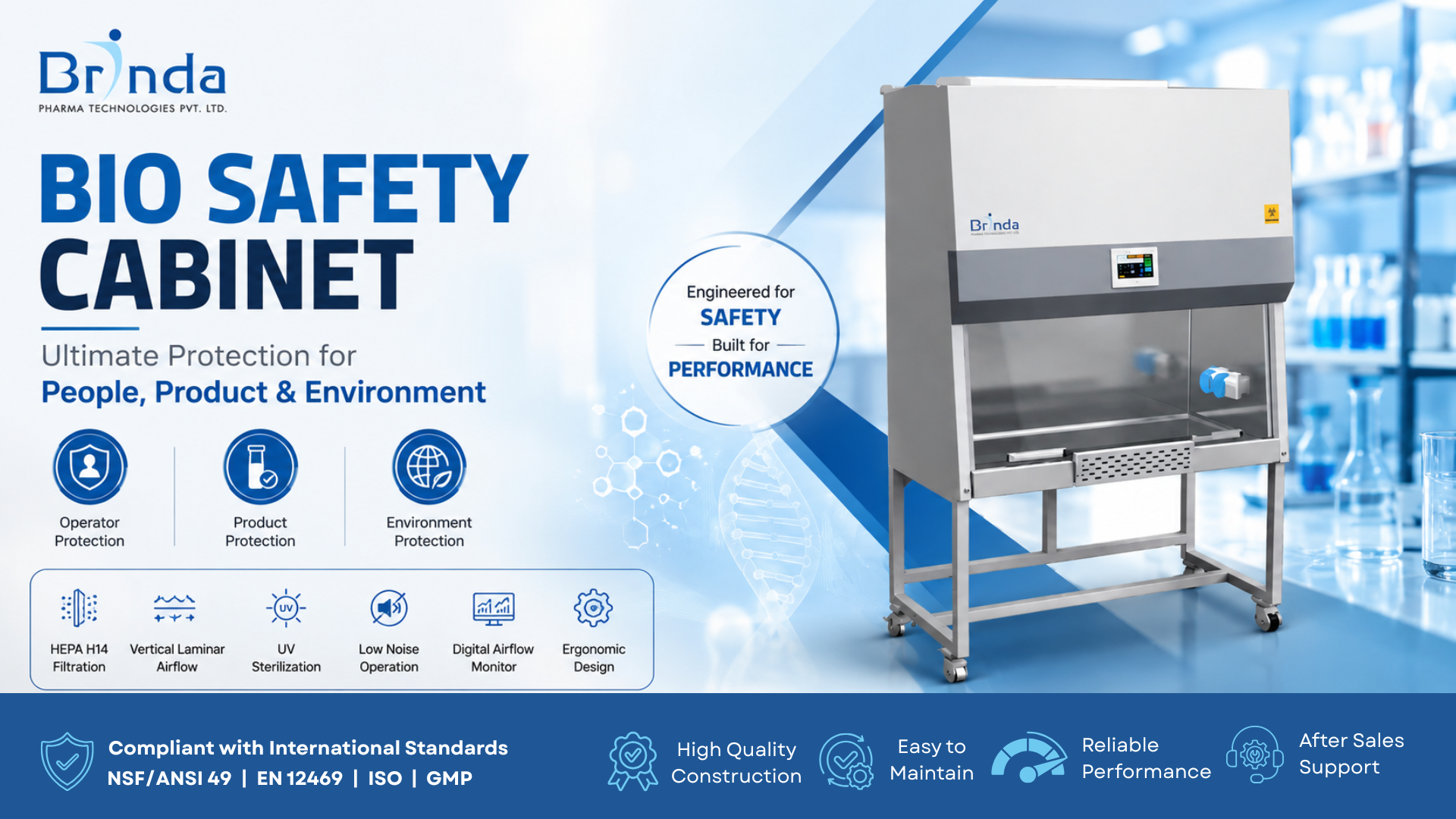
A Bio Safety Cabinet (BSC), also known as a Biological Safety Cabinet, is a specialized enclosed workspace designed to protect laboratory personnel, the environment, and sensitive biological samples from contamination. It uses HEPA-filtered airflow to create a controlled working environment, making it ideal for handling infectious microorganisms, cell cultures, and other hazardous biological materials.
Bio Safety Cabinets are widely used in pharmaceutical manufacturing, biotechnology, microbiology, research laboratories, hospitals, and diagnostic centres. Unlike standard laboratory benches, a BSC provides three-way protection operator safety, product protection, and environmental containment. Modern cabinets are designed to comply with international standards such as NSF/ANSI 49, EN 12469, and WHO laboratory biosafety guidelines, ensuring safe laboratory operations.
The primary purpose of a Bio Safety Cabinet is to provide a safe and contamination-free environment when working with biological materials. It minimizes the risk of exposure to infectious agents while maintaining the integrity of laboratory samples.
A Bio Safety Cabinet protects laboratory personnel through inward airflow, safeguards products using vertical HEPA-filtered laminar airflow, and prevents contaminants from being released into the surrounding environment. This makes it an essential piece of equipment for laboratories handling pathogens, cell cultures, vaccines, pharmaceuticals, and microbiological testing. It also helps organizations comply with biosafety regulations and Good Manufacturing Practices (GMP).
Material of Construction (MOC) in a Bio Safety Cabinet (BSC) refers to the materials used to manufacture its key components, including the work chamber, work surface, exterior body, and structural frame. The MOC plays a crucial role in ensuring durability, corrosion resistance, hygiene, and compliance with laboratory and GMP standards.
Most Bio Safety Cabinets feature an SS 304 or SS 316 stainless steel interior with a seamless, non-porous finish that is easy to clean and resistant to chemicals and microbial contamination. The exterior is typically constructed from powder-coated mild steel or stainless steel, while the front sash is made of toughened safety glass. Selecting the appropriate MOC enhances contamination control, extends equipment lifespan, and ensures safe, reliable performance in pharmaceutical, biotechnology, healthcare, and research laboratories.
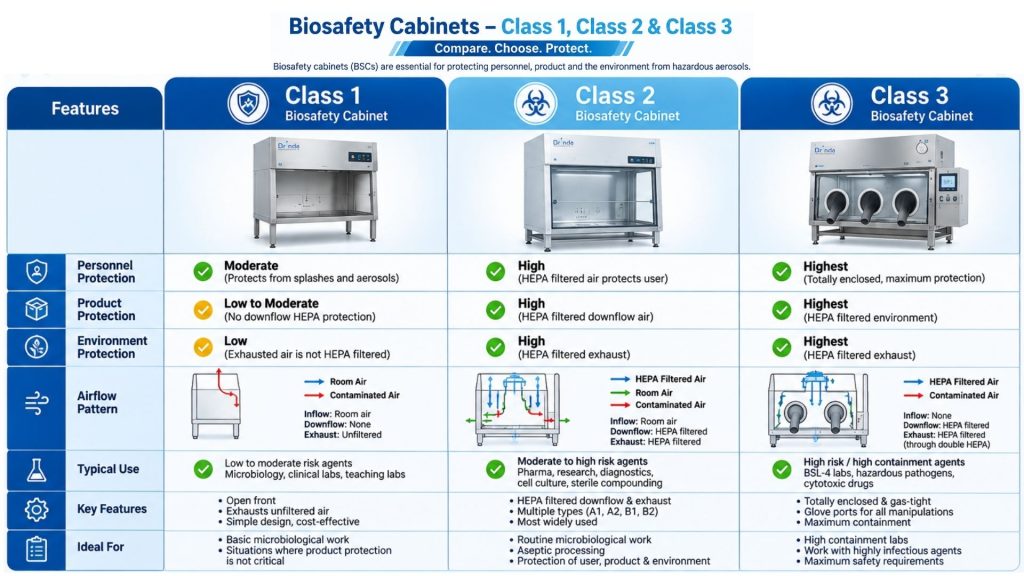
Bio Safety Cabinets are classified into Class I, Class II, and Class III, based on the level of protection they provide.
A Class II Type A2 Bio Safety Cabinet is the most widely used biological safety cabinet in pharmaceutical, biotechnology, and research laboratories. It provides comprehensive protection for laboratory personnel, biological products, and the environment through HEPA-filtered inflow and downflow air.
Approximately 70% of the filtered air is recirculated within the cabinet, while the remaining 30% is exhausted through a HEPA filter. This airflow design ensures effective contamination control while maintaining a sterile working environment. Class II Type A2 cabinets are commonly used for microbiological research, tissue culture, pharmaceutical quality control, diagnostic testing, and vaccine development. Their versatility, energy efficiency, and compliance with international standards make them the preferred choice for most laboratory applications.
Bio Safety Cabinets are used across a wide range of industries where contamination control and biosafety are critical. The pharmaceutical industry relies on BSCs for sterile manufacturing, quality control, microbiological testing, and vaccine production. Biotechnology companies use them for genetic research, recombinant DNA technology, and cell culture applications.
Hospitals and diagnostic laboratories depend on Bio Safety Cabinets for clinical sample handling and infectious disease testing. Academic and research institutions use them for microbiology, molecular biology, and biomedical research. Other industries, including food testing laboratories, environmental monitoring facilities, veterinary laboratories, cosmetics manufacturers, and medical device companies, also utilize Bio Safety Cabinets to ensure safe and contamination-free laboratory operations.
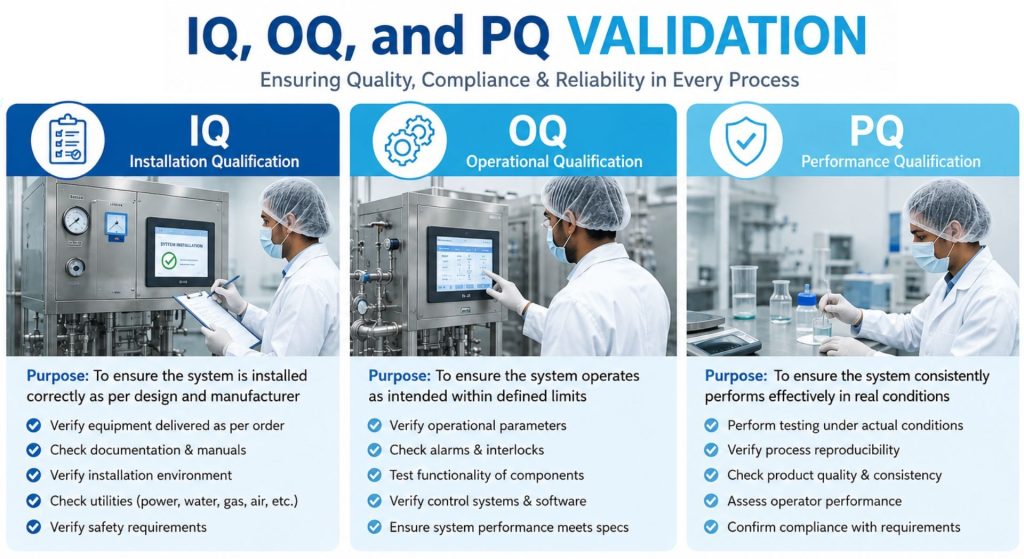
IQ (Installation Qualification), OQ (Operational Qualification), and PQ (Performance Qualification) are validation processes that confirm a Bio Safety Cabinet is installed correctly, operates according to specifications, and consistently performs as intended.
Together, IQ, OQ, and PQ validation support regulatory compliance, ensure user safety, and maintain product quality in GMP-regulated facilities.
For most pharmaceutical laboratories, a Class II Type A2 Bio Safety Cabinet is considered the best choice because it offers balanced protection for operators, products, and the surrounding environment. It is suitable for aseptic processing, microbiological testing, quality control laboratories, tissue culture, and sterile pharmaceutical applications.
Laboratories working with highly hazardous biological agents or specialized containment requirements may require Class II Type B2 or Class III Bio Safety Cabinets. The ideal cabinet depends on the type of biological materials handled, biosafety level, laboratory workflow, regulatory requirements, and facility design. Selecting a cabinet that complies with recognized international standards ensures reliable performance and long-term operational safety.
Selecting the right Bio Safety Cabinet begins with understanding the laboratory’s specific applications, biosafety requirements, and operational workflow. Factors such as the type of biological agents handled, laboratory space, cabinet size, airflow configuration, energy efficiency, and certification standards should all be considered during the selection process.
It is also important to evaluate HEPA filtration efficiency, ergonomic design, noise levels, maintenance requirements, and after-sales support. Laboratories operating under GMP or regulatory frameworks should ensure the cabinet supports validation protocols such as IQ, OQ, and PQ. Choosing the appropriate cabinet not only enhances safety but also improves productivity, compliance, and long-term cost efficiency.
Proper installation is essential to ensure the safe and effective operation of a Bio Safety Cabinet in GMP-regulated facilities. The cabinet should be installed in a location free from excessive air turbulence, away from doors, windows, air conditioning vents, and high-traffic areas that may disrupt airflow patterns.
Adequate clearance should be maintained around the cabinet to facilitate maintenance and filter replacement. Electrical connections, exhaust requirements, and environmental conditions must comply with manufacturer recommendations and applicable regulatory standards. Following installation, the cabinet should undergo comprehensive validation, including HEPA filter integrity testing, airflow verification, smoke pattern testing, and performance qualification before being approved for routine laboratory use.
Overview:
A Class I Bio Safety Cabinet provides personnel and environmental protection, but it does not protect the product or sample from contamination. Air is drawn into the cabinet and exhausted through a HEPA filter.
Common Industrial Uses:
Suitable For:
Overview:
A Class II Bio Safety Cabinet provides personnel, product, and environmental protection. It uses HEPA-filtered laminar airflow to maintain a sterile working environment, making it the most widely used biosafety cabinet in regulated industries.
Common Industrial Uses:
Suitable For:
Industry Preference:
✅ Most commonly used in pharmaceutical, biotech, healthcare, and life sciences industries.
Overview:
A Class III Bio Safety Cabinet is a completely enclosed, gas-tight cabinet that provides the highest level of personnel, product, and environmental protection. All operations are performed using attached glove ports, and both supply and exhaust air are HEPA filtered.
Common Industrial Uses:
Suitable For:
Industry Preference:
✅ Used in high-risk research laboratories, advanced pharmaceutical research, and maximum containment facilities.
Bio Safety Cabinet Class | Protection | Best For | Common Industry Applications |
Class I | Protects Personnel & Environment | Handling low to moderate-risk biological materials where product protection is not required | Microbiology Laboratories, Educational Institutes, Environmental Testing Labs, Waste Handling, Research Laboratories |
Class II | Protects Personnel, Product & Environment | Sterile processing and contamination-sensitive applications | Pharmaceutical Manufacturing, Biotechnology, Hospitals, Clinical Diagnostics, Cell Culture Labs, QC Laboratories, R&D Centers, Vaccine Production, API Manufacturing |
Class III | Provides Maximum Personnel, Product & Environment Protection | Handling highly infectious or hazardous biological agents in a completely enclosed system | BSL-4 Laboratories, High-Containment Pharmaceutical Facilities, Infectious Disease Research, Government Research Institutes, Biodefense Laboratories, Advanced Vaccine Research |
Brinda Pharma Technologies Pvt. Ltd. is a trusted manufacturer of high-quality Bio Safety Cabinets designed to meet the demanding requirements of pharmaceutical, biotechnology, healthcare, and research laboratories. The company focuses on delivering equipment that combines advanced engineering, robust construction, and compliance with international quality standards to ensure reliable contamination control and operator safety.
Its Bio Safety Cabinets feature high-efficiency HEPA filtration, stainless steel construction, ergonomic design, energy-efficient operation, and user-friendly controls. With expertise in cleanroom and laboratory solutions, Brinda Pharma also offers installation support, validation assistance, customization options, and dependable after-sales service. By prioritizing quality, regulatory compliance, and customer satisfaction, Brinda Pharma provides laboratories with reliable biosafety solutions that support safe and efficient scientific operations.

Explore our complete range of Clean Room Equipment, Laboratory Furniture, Turnkey Projects, Process Equipment, and Packaging Machinery.
© Copyright Brinda Pharma Technologies 2026. All Rights Reserved
Error: Contact form not found.
Error: Contact form not found.